The Map and its Uncertain Terrain –
A review of Munir Hachemi's Living Things
January 7, 2026

The balance is achieved by Hachemi opening the novel with basic theory couched in characterization as we meet Munir’s friend G who instantly argues that, “...the purpose of stories is to classify, to impose order and hierarchy on the real world.” The clarity of this construction is subsequently obscured by the following retort, “But reality is a wilderness – a jungle or desert – a place that cannot be mapped.” [emphasis added] In two sentences we thus have blazed the most obvious trail we are to take through the terrain ahead. As a consequence, the tension arises from the uncertainty of the narrative itself. Is the account of this working holiday in the south of France true within its own universe – do we care? – and will the plot even be resolved as a story? In other words, in a novel so beset by questions of form and content, are we owed such a catharsis in the first place? The novel – and, by extension, attentive reader – becomes obsessed with this dichotomy, and in the end both are the better for it.
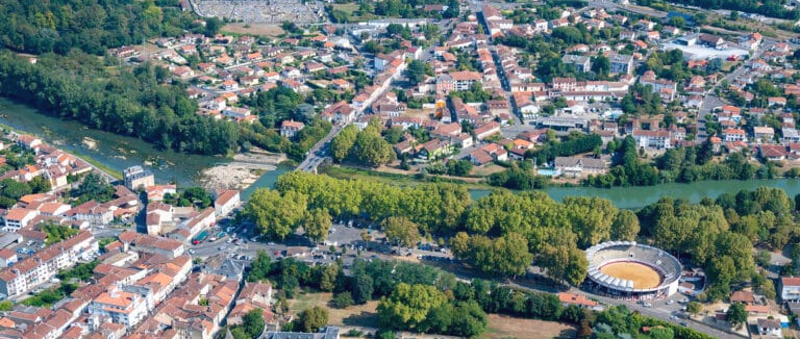
The terrain, as we understand it, involves these four young men – Spanish, ostensibly friends although we must wonder what their friendship amounts to in the end – as they travel to the town of Aire-sur-l'Adour (‘River on the river’, itself an improper lexical mapping, hereby Aire) in southern France to gain life experience and make some money working the sort of odd jobs involving animals and agricultural research the rest of us would – and, in the course of reading, do – recoil at. Enlisting themselves with an agency for temporary workers, the friends quickly descend into the horrors of factory farming and all of the abuse, exploitation, and horrible smells that come along with it. We sympathize with the characters, but our worst instincts immediately want to rise above their experience and classify them into neat categories: Munir the middle-class, self-conscious but likeable narrator; Ernesto, the serious, privileged bougie who invites comparisons to his revolutionary namesake; Alejandro the middle class lout who only wishes he was serious; and G, noted as a Marxist, but otherwise representing a sort of anarchic, Bacchanalian force of chaos, so wild and unpredictable he is not even ‘mapped’ with a proper name. Through the disordered confluence of these personalities emerges a conspiracy involving murder and Synngate, a Monsanto-like agricultural megacorp that terrorizes the protagonists with PowerPoint slides as they in turn inflict their own terror upon the private denizens of Aire around them. Via an atmosphere of subtle paranoia, we almost wonder if Hachemi is making a nod to Pynchon, albeit to a less overtly humorous effect.
Before the novel begins we are advised by James Joyce in the epigraph that, “We can’t change reality, but we can change the subject.” Conveniently, this is true in two senses: one, in the manner we would commonly interpret that turn of phrase as avoiding or reframing reality – a series of disturbing events – to ignore or make sense of them so that any confusion or trauma is temporarily overcome until at some point in the future it rears its head again. But also in the sense of the subject as the subjective experience of oneself encountering objects in the world, and how that changing mediation in the form of text or temporal distortion reflects back on that same subjective consciousness. At one point Munir unapologetically admits some details of the journal entries have been altered after the fact and invites us to notice where, justifying the act on the basis that it helps to communicate, “whatever truth my story may hold.” Are these details actually consistent with what ‘happened’ beyond the page? We, the reader, forgive this transgression for his honesty, partly because Munir himself is a transparent and therefore likeable narrator, but also because Hachemi has primed us for this very device: Living Things exhibits an unabashed, self-conscious concern with form and how that works on the terrain, or reality, of the novel.

There are seven chapters in the novel and each is named after an extant work by authors like Ricardo Piglia and Jorge Luis Borges, among others. Munir the narrator encourages a relatively straight reading of the text, reminding us more than once that, “there is no metaphor in these pages.” But Hachemi the author is only too happy to apply a range of interpretive maps. The chapter named for Gabriel García Márquez’ Chronicle of a Death Foretold, for example, marks the transition from a straight linear telling of the plot – four friends arrive in Aire from Spain – into discrete and disjointed journal entries which, as we have seen, have been ‘retconned’ after the fact. In the chapter named for Alejo Carpentier’s Journey Back to the Source, which chronicles a man’s life backwards from his funeral to his birth, we see Munir and G by the end inexplicably crying like babies. Such an example risks being too on the nose, of course, but the novel is rife – and I mean rife – with intertextuality. By explicit author references alone, I gave up after counting twenty-five, ranging from Homer to Hemingway, Stendhal to Schopenhauer, and hitting every Latin author of note along the way in addition to Houellebecq and his The Map and the Territory which, through Munir’s in-story reading, hammers home the primary dynamic underpinning the novel.

Operating under this orientation, the reader who favours plot over metanarrative may experience a sort of dread: are we ever going to get a real story here? Between reflections on Hemingway’s iceberg theory and the inclusion of a literal top ten list of why writers should obtain life experience, such a reader may initially miss the very real effect this instills: instead of concerning the plot and characters, tension emerges at a meta-level. Does all this theory talk, we almost hesitate to wonder, mask an effort which cannot stick the landing? At times that seems likely, as if Hachemi is too educated either for his creative capacity or for his ability to pull this off, couching the story in its theoretical framework at the expense of an engaging plot. Munir teases this possibility in the lead up to the climax, noting that reality “doesn’t have to conform to the narrative demands of its readers.” In the end, our hope that this is priming us for a reversal to fulfill the promise of the story and not merely a hedge against disappointment is sustained – all is revealed and resolved insomuch as a story like this which so strongly spiritually channels its influences can be resolved.
Through this intertextuality and focus on the pragmatics of language – i.e. the layer above semantics which concerns itself with context and its influence on the written word – Living Things exerts a seductive effect on the reader which allows them to read into, inscribe upon, or – in keeping with the metaphor – cartographically project onto the novel their own preoccupations. For example, the class conflict between the four young men and their employment at the nefarious Synngate invites an obvious Marxist interpretation for anyone of a socialist bent who reads Mark Fisher or David Graeber and is dissatisfied with their office job. And although that could go a long way, many other interpretations are possible. For me, reading the novel in parallel with Nietzsche’s The Birth of Tragedy, the eponymous ‘Los Combatientes’ of chapter four necessarily involves Dionysiac forces pitted against the Apollonian. That iceberg goes deep, but could it be more obvious?
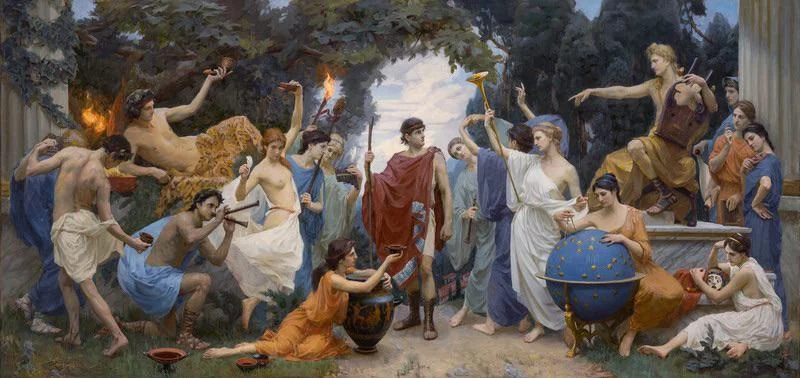
Nietzsche, we are reminded, characterized the Dionysiac as the essential component to early Greek tragedy. It is the force of the chorus and the archetypical hero in which individuation dissolves and intoxication reigns; through suffering and loss of self, the hero affirms all that is constituent in life regardless of morality or interpretation, good or evil. Are the four friends, suffering under exploitative labour conditions and trashing their accommodations at a local campground, not experiencing that same dissolution? With the shift to the Apollonian, we see form, individuation, and representation take shape until reaching its culmination in what Nietzsche termed ‘aesthetic Socratism’: the primacy of reason, self-knowledge, and art as moral instruction, out of which our two thousand year tradition of rationalism and scientific realism emerged. Knowing thyself is a virtue, and explaining art is essential as evinced by the very review. But as Munir demonstrates this is an illusion. By the end of the novel, G has repeatedly suggested setting fire to their campground and bombing Synngate, and all four young men are at the very least actively sabotaging its scientific trials. Why? There is no virtue or moral clarity here. The Dionysiac requires no justification – it is pure active force.
In the end, the eager reader fascinated with his own nascent literacy must take a lap. For all that the supposed map charts, it also asserts the basic actuality that four young men bit off more than they could chew, and that in their own immaturity or lack of socialization, they fall into the basic pitfall of redirecting their rage at the innocents around them. We are left with the final question of who is to blame – them as individuals, or the system for making them so? In either case, we come to accept that Living Things may in fact be nothing more than a record of young, privileged, undersocialized assholes who are broke and rootless with no need to respect any of society’s constructions and suffering no material consequences for having violated them. We may not find this satisfying, but we also come to Munir’s understanding of, “Piglia’s famous question: how to narrate the horror of real events?” With Living Things Hachemi presents a worthwhile map.
– top